


Wedding gift etiquette sounds straightforward until you are actually staring at a couple’s registry at 11pm, torn between the $45 salad bowl and the $300 Dutch oven, with zero idea if either is appropriate.
The rules have also shifted in ways that might surprise you.
According to data from Zola, 86% of couples now believe that asking for cash is completely acceptable, and the old idea that a physical gift from a department store was the only “proper” way to give has quietly faded.
What has not changed is the expectation that you show up – figuratively, at least – with something thoughtful, as long as you stick to relevant wedding gift etiquette.
10 Wedding Gift Etiquette You Should Follow
Below is everything you need to know about wedding gift etiquette, from setting a budget to navigating elopements, destination weddings, and every awkward scenario in between:
1. Set Your Budget Before You Touch the Registry

Do not start with the registry. Start with your wallet.
Because, if anything, browsing a wish list full of $400 wedding gifts before you have a number in mind is a fast track to decision paralysis.
The Knot’s 2025 Weddings Study found that the average cost per wedding guest is $284, and wedding guests spent an average of $150 on gifts in 2024.
That number gives you a useful anchor, but it is not a strict rule. Your relationship with the couple, your travel costs, and your financial situation all factor in as well.
Here is a practical spending breakdown:
| Your Relationship to the Couple | Attending Solo | As a Couple |
| Coworker or casual acquaintance | $50 – $75 | $75 – $100 |
| Friend or distant relative | $75 – $125 | $125 – $175 |
| Close friend or wedding party member | $125 – $200 | $175 – $250 |
| Close family member (aunt, uncle, cousin) | $150 – $250 | $250 – $350 |
| Immediate family (sibling, parent) | $250 – $500 | $500+ |
| Cannot attend but want to give | 50% of your usual amount | — |
Do not let anyone pressure you into spending beyond your means. A thoughtful $60 gift sent on time and with a genuine note beats a $200 gift dropped off six months late with nothing personal attached.
2. Use the Registry as Your Starting Point

The registry is not a suggestion but a carefully considered list of things the couple actually wants.
If you go off-registry without a solid reason, you risk buying something they already own, something that does not fit their space, or something they will quietly return the week after the honeymoon.
Today’s registries cover far more ground than they used to. You will typically find a range that includes everyday cookware, small kitchen appliances, table linens, cookware and bakeware, and dinnerware for hosting.
Check the registry early. The most practical items at accessible prices are usually the first to go.
3. Give Cash When It Makes Sense — and Do It Gracefully

Cash used to feel impersonal. That stigma is largely gone.
Around 70% of couples now include cash funds on their registry, and giving cash as wedding gifts is one of the most practical options, especially for couples who already live together and have most household essentials covered.
The amounts follow similar logic to physical gift if you go the cash route:
| Relationship | Suggested Cash Amount |
| Acquaintance or coworker | $50 – $75 |
| Friend or distant relative | $75 – $100 |
| Close friend or family member | $100 – $150 |
| Immediate family | $150 – $300+ |
Handing over loose bills at a reception table is a hard no. Always put cash or a check inside a card with a handwritten note.
When writing the check, address it to both partners using the names they currently go by. Either person should be able to deposit it without calling the bank.
4. Go Off-Registry Only in These Three Situations

Going rogue on the gift list is a gamble even with the best intentions.
If you shop off-registry, you run the risk of giving something the couple already has or does not have space for. And buying a cheaper version of something on their list is one of the worst gift giving mistakes you can make.
Stick to off-registry gifting when you know the couple well enough to shop for them with confidence, when the registry has completely sold out, or when every item is genuinely out of your budget.
5. Navigate Group Gifting Without the Awkwardness

Group gifts solve a real problem.
Some of the best items on any registry, such as quality cookware sets and kitchen appliances, sit in the $400 to $800 range, which is more than most guests want to spend alone.
Pooling with a few people makes those items reachable without anyone feeling the pinch.
Group gifts work especially well for friend groups, extended families, and office coworkers, particularly if you have already spent money on a bridal shower gift, pre-wedding events, or a bachelorette party.
On most registries, you find a larger item flagged for group contribution. Enter the amount you want to give, and the total accumulates until the couple can claim it as store credit.
6. Send Your Gift at the Right Time
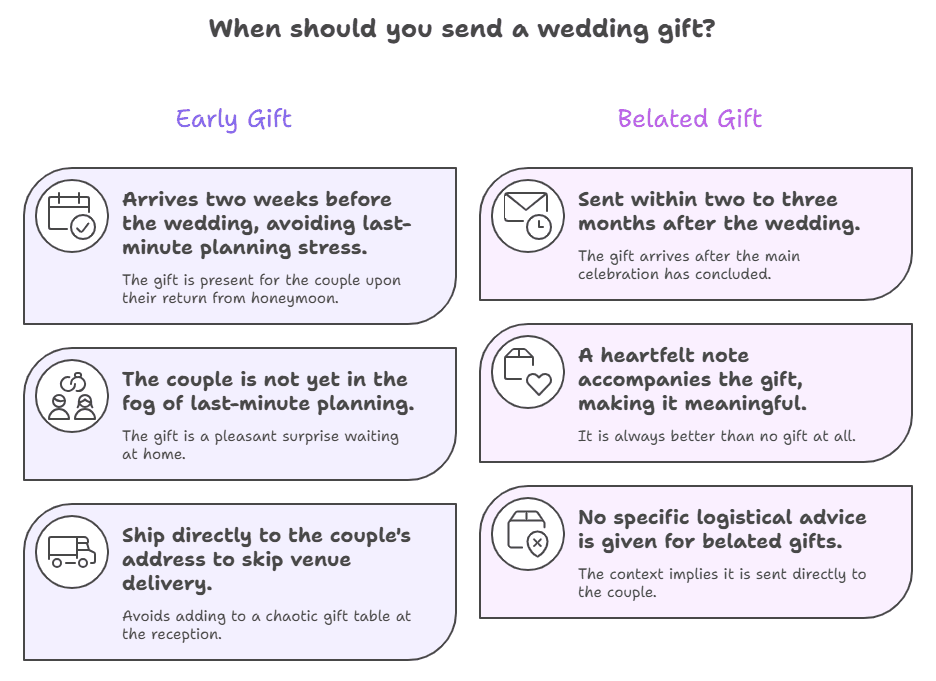
Let’s get one thing clear: timing says as much about you as the gift itself.
The sweet spot is two weeks before the wedding. The couple is not yet in the fog of last minute planning, and your gift will be waiting at home when they return from the honeymoon.
Most retailers ship directly to the couple’s address, so use that option and skip bringing wrapped gifts to the venue entirely. A gift table at a reception is chaotic enough without a blender on top of it.
If you miss the two-week window, sending your gift within two to three months is perfectly acceptable. And a belated gift with a heartfelt note is always better than no gift at all.
7. Handle Destination Weddings Without Overcomplicating It

Saying yes to a destination wedding already costs you real money for flights, accommodation, time off work, and probably a new outfit. The gift does not need to compensate for all of that, and most couples understand this.
Modern wedding gift etiquette recognizes that when you are already spending on travel and accommodation, it is completely acceptable to adjust your gift budget accordingly.
- Ship any physical gifts to the couple’s home before you leave for the destination.
- If you are giving cash or a check, send it before the wedding date rather than handling money at the event.
- If you cannot attend a destination wedding at all, a gift is a thoughtful gesture for close friends and family, but it is not a hard rule for distant acquaintances.
8. Respect the Rules for Elopements and Virtual Weddings
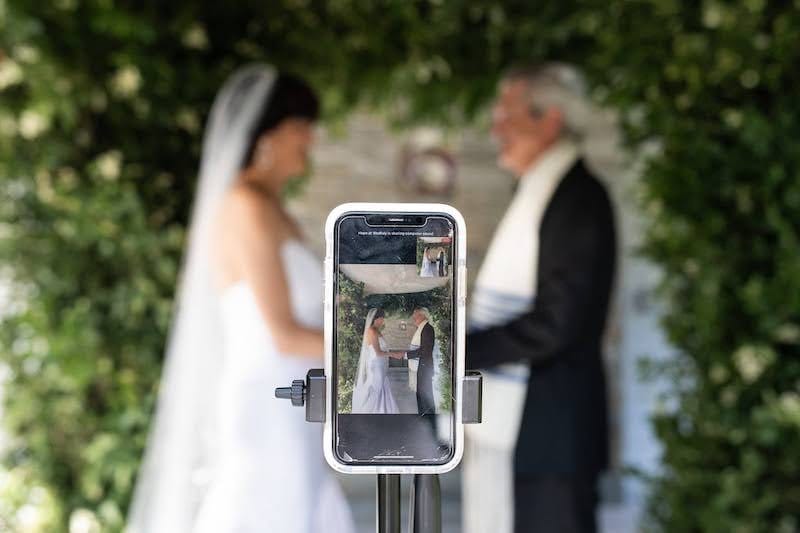
Elopements do not come with a guest list or a registry, which means expectations are refreshingly low. You are not required to give a gift.
If you want to acknowledge the marriage, something small sent after the announcement is entirely appropriate. Cash works well here since there is nothing to reference.
Virtual weddings are a different story. Whether you attend in person or log in from your living room, the expectation is that you treat it like any other wedding when it comes to gift giving. Send it to their home. The format of the ceremony does not change what the occasion means.
9. Know When You Are Actually Off the Hook
Not attending does not automatically get you off the gift list, but it does change the picture significantly.
- Close family members who cannot be there should still send something or contribute to a group fund because their absence is more noticeable.
- Friends can send a gift within their budget.
- Loose acquaintances or coworkers who are not attending owe nothing beyond a congratulations message, and that is completely fine.
10. A Note for the Couple: Etiquette Goes Both Ways

If you are the one getting married, your responsibilities do not end when the gifts arrive.
- Open them as they come in rather than saving everything for one frantic unwrapping session later.
- Send specific thank-you notes. Mention what you received and how you plan to use it, because couples who do this are remembered for it.
One more thing worth knowing:
Traditional etiquette holds that putting registry information directly on your wedding invitations can come across as presumptuous, since gifts are technically not required from guests.
The cleaner move is to add your registry link to your wedding website and reference the website on the invitation instead.
How Much Should I Spend on a Wedding Gift?
When it comes to how much to spend on a wedding gift, it depends on your relationship and budget.
Most etiquette guidance places $150 to $200 as the ideal range per person, with $100 considered a reasonable lower limit for most situations. Circumstances like travel costs or financial constraints can justify going below that.
Should I Give Gifts at the Engagement Party, Bridal Shower, and Wedding?
Engaged couples should include items at a range of price points on their registry, keeping in mind that guests who attend multiple pre-wedding events – engagement parties, bridal showers, and the wedding itself — may be giving multiple times.
Smaller gifts at pre-wedding events are fine to bring as a guest, with your main gift reserved for the wedding.
Do I Have to Give a Gift for a Second Wedding?
You are not required to give a second marriage gift, but it is a kind gesture. If the couple has a registry, use it. If not, a modest cash gift or a personal card is entirely appropriate.
How do I Give a Group Gift Without It Feeling Disorganized?
One person takes point on collecting contributions, everyone’s name goes on a single card, and the couple knows exactly who to thank. Most registry platforms handle the financial side automatically, no awkward envelope passing required.